Friday, 12 August 2011

Studio spy

First off, apologies for being a very lax blogger! I've been up to my eyes in wedding corsets, mostly underwear ones. Lots of last minute work and a bit stressed.

As I managed to catch my sewing room on a rare tidy day after I'd given it a good clear up (trust me, it normally looks like a bomb has hit it) I thought I'd take some pics of it so you can see where I work. As you'll see it's not big, just the small bedroom in my tenement flat and I have to say, it's in sore need of painting but the idea of clearing it to paint is pretty terrifying! It's a bit of nightmare to paint as it has very high ceilings and although it's a small room it takes a remarkable amount of the stuff! 


First, a general view from the door. Comfy chair, beloved Pfaff Creative 2.0 and the digital radio that keeps me company. I need another shelf above the top one, as it's a tip, but I haven't got round to doing that (or should I say I haven't got round to buying the shelf and getting someone else to do it).


Behind the chair - bolt-cutters for boning, a mini pressing station to save me having the big iron board out. grommet press and the end of my lovely 50s Singer 201k.


Frank the Singer and a dilapidated dress form I keep mainly for fitting for models as it's particularly small.


The wardrobe stores fabric and notions in those Ikea hanging sweater racks (and no I'm not opening the door, I didn't tidy that far, think yourself lucky you can't see the mess on top of the wardrobe!). Rolls of fabric and Naomi and Nicole the dress forms! The unfortunate stain on Nicole isn't mutant lactation, but a gel pad I'd used to pad up the bust that leaked a bit. Yes, she does have Sweep instead of a head! Oh, and lots of books, I do like my books!


My usual view, well it's usually messier. Thread in the plastic racks, and in the jars. Zippy was won for me at the shows :) The wedding photo in the mirror frame is my grandparents. This is just all the bits and pieces that make it homely, as I'm sat here a lot. I'll never be able to do minimalism!


Betty cracking the whip in case I'm skiving! And the bench grinder. Oh it's not all girly lace and ribbons in corsetmaking. Sometimes it's goggles and sparks and hardware!


And lastly a peek in the drawers where I attempt to organise things. Corsetry involves lots of little bits of notions and tools. I try to keep my grommets, bone tips, beads, buckles etc all filed in here. Needless to say it doesn't always stay that way.

Hope you've enjoyed a wee nosy around my workroom. Now I should really go back through and mess it up some more!


Monday, 13 June 2011

Corsets for brides

As I've been making quite a lot of corsets for brides to wear under their dresses I thought I'd put together a little guide for anyone thinking of doing just that. Not just brides of course, it's relevant to anyone considering an underwear corset.


So, why go for a corset for under your dress?

Two reasons. Firstly if you require more support or reduction than your average plastic boned basque can offer. Secondly if your dress doesn't have enough structure to achieve the look you want. Those two are not of course mutually exclusive.

The first reason is self-explanatory. Nothing will pull you in or hoist you up as much as a proper steel boned corset made to your measurements. And, although the silhouette achieved with corsetry as opposed to modern underwear is undoubtedly different, the shape varies a great deal with the style chosen. A gored bust can be cut to give you more of a cup shape (as above), or of course you can wear an underbust corset with a bra of your choice.

The other argument given against underwear corsets is bulk. Many outerwear corsets are made with multiple layers and can be substantial garments. However that really isn't necessary. When you study genuine antique corsets what takes you aback at first is how lightweight many are. It is entirely possible to produce a strong yet lighweight corset from a single layer of fabric (although I usually also add a fine cotton lawn lining for comfort) leading to no more bulk than many basque type garments.


The second reason is more aesthetic. For example, there has been a surge in popularity recently for vintage style gowns, particularly 1950s styles. But look at the original gowns and then look at some modern versions -  see the difference? The original gowns had either substantial built in corsetry or were worn over powerful underpinnings. Even someone as sylphe-like as Audrey Hepburn had some help to get that firm nipped waist. Many modern dresses lack that structure and that's why the proportions just never look quite so glamourous as their inspiration does. Catherine Middleton's gown, as discussed previously here, is another great example. Have you seen the copies? Do they look the same, even on a model's slender body? No they do not and that's because they lack the considerable structure of the original gown. I know that seems obvious to those of us who are familiar with corsetry and with clothing styles of the past, but if you aren't you might just see that something is not quite right but not know quite what.


So what now?
  1. Decide on your dress. There are some dresses which do have corsetry built in and are unlikely to need an additional corset. 
  2. Check the weight of the fabric, beading etc. Would the bumps of busk studs show through? If so a buskless corset would be best. Is it drapey and clingy, or bias cut? I wouldn't advise a corset for those as they will show no matter what, that's when the decidely unglamourous but smooth Spanx come into their own.
  3. Pay careful heed to the top line of the dress front and back. Is it particularly low at the back? That can be problematic for a corset, especially if your bust is on the larger side.
    Tip: before you go for a corset fitting have someone draw the top edge on your back, or at the very least measure up from your waist at several points and note them down.
  4. Order your corset in plenty of time! You will need your corset before your first dress fitting as corsets alter your shape a LOT, and not just your waist measurement.
  5. Be prepared for at least one mock-up fitting and at least one fitting in the finished corset. Renowned corsetiere to the stars and the couture houses, Mr Pearl, can require up to 12 fittings!
  6. Try to schedule your fittings for about the same time in the month as your wedding. Our figures can change dramatically throughout our cycles, with bust sizes often altering by a cup-size.
  7. Tell your corsetiere everything. What your dress is like (take pictures if you can); where you feel you need figure help; what extras you need (modesty panel, loops for suspenders etc); what image you have in your head.
  8. Remember there are possibilities beyond the sample you've seen. You could have straps, or trim, all sorts of things. Just ask your corsetiere. 
  9. Take a bridesmaid or your mum along to a fitting so they can be shown how to lace you up. Your wedding day when everyone is nervous and has had their nails done is not the time to be getting flustered trying to figure out corset lacing.
  10. Very important - eat before a corset fitting. Nothing too heavy or too soon before the fitting, but a light snack so there's no danger of you fainting. Gassy liquids aren't recommended though when you wear a corset (although don't worry, I think you can be allowed some champagne).
  11. Be realistic. We can work near miracles but we have our limits. For instance, if your lower tummy is an area you're unhappy with then we can curve the corset in to flatter and hold your tummy in but there's only so low the corset can go and leave you mobile and able to sit down! A stretchy suspender belt is a good option to smooth you below the corset line. Tell your corsetmaker, she may have suggestions.
  12. Above all enjoy it! Having a bespoke garment created for you is a very special experience and one you're paying for. And don't be shy, your corsetmaker isn't looking at 'you' when she's fitting you, she's looking at the corset on you and how it's behaving. So have fun, relish the chance to see a craftsperson at work, take the opportunity to indulge your notion for lace or your hankering for embroidery. This is a special garment for a special day so savour it.

I hope that's helped some of you. Personally I love working with brides, I love getting a little share of their excitement, and seeing someone's figure worries vanish because of something I've made is truly the best reward there is.

    If only....

    The new Riverside Museum  will be open next week, on the 21st to be exact. I'm looking forward to seeing it as I always enjoyed visits to the old Transport Museum. To be honest I'm old enough to remember the previous one where the Tramway now is! As my grandfather was a railwayman I was shown the trains with particular enthusiasm.

    My favourite part of the Kelvin Hall incarnation of the museum was the 1930s street, with reputed ghost and all! The lighting, underground station, cinema all gave a convincing back in time feel. The only flaw was that you couldn't enter the shops, which they got round by setting the street in early evening just after closing time. I believe the new museum has an improved and enlarged streetscape which I'm looking forward to seeing. Better I hope than the Museum of London's 'street' which could've been marvelllous but suffered from being too indoors with too many cutaway shopfronts giving a rather dolls house feel to it. The Glasgow one on the other hand felt like a real street. So fingers crossed it lives up to expectations.

    Now what I really, REALLY wish they'd have on the street is something like this...


    George Eastman House Collection

    So if anyone from Glasgow Life is reading this....give me a shout. I'd be more than happy to keep shop!

    All the dolls I had...

    So what got me interested in costume and the fashions of the past? Well the answer is more or less below! As a child I was taken around many castles, historic monuments and stately homes and loved it. Family holidays always involved trips like that and with my vivid childhood imagination I could picture those castles as they had been no matter how ruined they were. And, as my dad has always been keen on history I could pour over the pictures in his books when I got home and feed my imagination even more.


    Of course those trips always end up in the gift shop if there is one and my holiday pocket money purchase of choice would be a costume doll. Add that to the gifts I then inevitably received, most notably from an Irish friend of the family who never visited home without bringing me back a doll, and I built up quite the collection.

    See what and who you can spot here! Some may not be as obvious as they appear and a couple of them I inherited so I'm not sure myself where they come from. But there's a Madame Pompadour, Anne Hathaway, Queen Margaret and an assortment from Jersey, Ireland and wee kilties from here of course. Comments and suggestions welcome, especially for the middle-eastern looking lady in the dark blue who has always been a bit of a puzzle. Also the back left doll with the blonde plaits and lace headress.

    I also had a Jean Plaidy book on the young Mary Queen of Scots, which teamed with the relative proximity of Linlithgow Palace and family links with Falkland, where her favourite home and hunting lodge was, gave me a fascination for her which persists today. She's in that box too, along with one of her ladies in waiting, Mary Seton.

    The only doll missing from here, as she was still out until recently is a very nice Lillie Langtry doll. Does anyone recall a fabulous doll shop on the Royal Mile, near to John Knox's house? It's gone now but it was a fantastic shop for a kid like me!

    Wednesday, 8 June 2011

    One girl, two centuries

    A little bit of eyecandy for you.... although people on my Facebook page will have seen these already.

    A few weeks ago I got the chance to have a few of my corsets photographed by Towzie Tyke on the upcoming model Christina Chalk. Strange coincidence as Christina's first steps into modelling were through a model search competition organised by the newspaper I used to work for, and I was responsible for the artwork for the whole campaign!

    But here are the photographs;


    First a grey spot broche corset with blackberry silk bust gussets and binding. A style that work brilliantly for all shapes and sizes. It's particularly good for larger busts (obviously not illustrated here) and as an underwear corset. Lots of options too, the bust gores can be decorated and the colour contrasts played with.


    Almost a 1940s feel with the hair and make-up (the artist's name will be edited in later as I don't have it to hand at the moment, and my memory is so bad!).


    Next raspberry pink toile de jouy stays. These were made to a 1785 pattern with some modifications. Trimmed with suede and with added hand embroidery. I'm thrilled with how these look on. This style works particularly well on smaller busts as it pushes you straight up and overall the shape is less reliant on curves than Victorian styles.


    Almost like a portrait of the times! You can see the ribbon attachments of the straps. A very pretty style from the back as well as from the front.

    Photographs copyright Jade Starmore 2011

    Wednesday, 18 May 2011

    The fall and rise of Mimi

    I've been doing a lot of reading lately on Glasgow and particularly on notable women in Glasgow. It's fascinating stuff!

    Many people are aware of the story of Madeleine Smith. I'd know about her since a school trip to the Black Museum in Glasgow's Pitt Street police office when I was at school, and from an old Ladykillers episode on TV. But I only knew the basic story of the 22 year old socialite from Blythswood Square who was tried for the murder of her lover in 1857.


    She was the grandaughter of one of Glasgow's most notable architects, who was also much loved by his employees & peers. Her father, also an architect, was wealthy with a town house in Blythswood Square and a country home in Helensburgh. Yet this well brought up girl started an affair with apprentice nurseryman, Pierre Emile L'Angelier,  from the Channel Islands, an affair she tried to keep secret due to their differences in station. They met at her bedroom window, and although rarely alone she lost her virginity to him and carried on the relationship for two years. Meanwhile her parents, oblivious to the relationship found her a more appropriate suitor whom she became engaged to. When she tried to end things with Emile and asked for her many letters to be returned he threatened to use them to expose her and force her into marriage to him. A month later he died of arsenic poisoning. Her letters were found in his rooms connecting her to him, and to damn her further she'd been seen buying arsenic in the weeks preceding his death. She was arrested for muder,


    The trial was a scandal. The detailed love letters to L'Angelier from his 'Mimi' were judged too shocking to be read out in full in court and her calm, cool demeanour remarked on. However public feeling was with her at the time, believing her wronged. The verdict was Not Proven as the evidence was circumstantial, they'd never been seen together for one thing. But did she do it? Soon after her lawyer said he'd rather dance with her than dine with her. But there have been various books released since researching the crime, some vindicating her.


    After her release she moved down to London to get away from the notoriety and to spare her family who must have suffered terribly. She met and married George Wardle, with the blessing of her father who supplied a dowry and attended the wedding.


    Now this was the part I didn't know. George Wardle was an artist, who became William Morris' business manager and was a friend of Phillip Webb who designed the famous Red House. Madeleine (now going by the name of Lena), as a skilled needlewoman, possibly herself worked with Jane Morris who was encouraged by her husband to gather a company of women to work on his embroidery designs. Her new social circle included the young Pre-Raphaelite brotherhood, and she entertained her bohemiam friends in her new home in Bloomsbury. It has been suggested she even modelled for Rossetti at some point as Mary Magdalene. No doubt her past gave her added character and interest that she would not otherwise have had.


    Over time her marriage fell apart and she struggled by with the support of her husbands relatives until at the age of 70 she followed her son to America. When her husband died in Plymouth in 1910 she married a man several years her junior, whom she'd probably been living with prior to that. Despite occasional press interest she kept her past relatively quiet and Lena Wardle Sheehy died in New York in 1928 aged 93.

    We'll never know whether or not she killed Emile, but in many ways she was a remarkable woman who was not constrained by the times she lived in. She carried on and lived a full and interesting life rather than disappearing into obscurity. It's hard to work out her character, she appears to have been rather selfish and manipulative but certainly self-possessed and strong enough to weather the publicity and notoriety. It seems her family had a harder time dealing with it. I find her rather fascinating, if not exactly likeable.


    So what has this to do with corsets you ask.... well maybe nothing, but just wait and see!


    An interesting article here: http://www.historyscotland.com/features/madeleinesmith.html
    And the author of a book on the subject has a site here: http://www.amostcuriousmurder.com/StoryFS.htm

    Sunday, 1 May 2011

    The umpteenth wedding dress post

    As everyone else is blogging about the royal wedding, I thought I'd get my tuppenceworth in. I hadn't intended to get caught up in it but I found myself absorbed in the spectacle and more interested than I'd expected in seeing this lad we've seen grow up get married. Perhaps those of us old enough to remember the 1981 wedding when we were all a bit less cynical felt a bit of a link that transcended politics or anger, or even logic. Maybe we needed to right the balance after wasting so much excitement 30 years ago on something that turned out to be so empty.

    But, this is a blog primarily about the clothes.


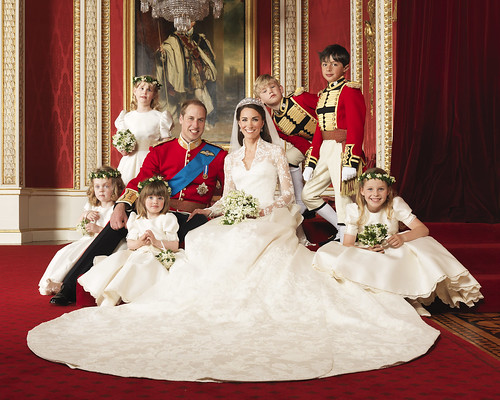
    The Official Royal Wedding photographs


    I thought the dress was perfect. Perfect for her, the occasion, the venue. A wedding dress is all context and all about the bride and a designer should be chosen to fit with what the bride wants. In that respect the house of Alexander McQueen with it's pedigree of the unconventional, might seem to be a curious choice for Kate Middleton, who has always demonstrated fairly conservative tastes. But it isn't really. Firstly it had to be a British design house, and it had to be a designer able to offer impact, structure, detail and quality of the highest degree. All things Sarah Burton at Alexander McQueen could do in spadeloads. It also had to ideally be a design house with a respect and knowledge of heritage and tradition, again McQueen fits the brief.

    The Service


    So the results; was the dress groundbreaking? No. Was it high fashion with a capital H? Again, no. This was not the place for that, nor was it the bride for that. An in-your-face, divisive dress would've been totally inappropriate. It was however beautifully cut and crafted with layers of fabulous understated detail. It had structure and enough volume to dominate the space without being a puffball or dominating her. I think lots of people expected her to go for something sleek and modern, perhaps more like Pippa's maid of honour dress. But in the setting of Westminster she needed more visibility and scale so that was never going to happen. It also referenced the past beautifully, with nods to Grace Kelly's famous lace sleeved wedding dress and also Princess Margaret's and even the Queen's wedding dresses. A nice touch to link to the past, and most visibly to a another non-aristocratic and high profile bride such as Grace Kelly. Yet the cut of the skirt and train had that flash of McQueen brilliance (and of course lace is very current) All in all, the detailed handmade lace, the top quality fabrics, the exquisite cut and a design which perfectly suited the woman and allowed her to shine, enhanced by the subtlety of the designers vision rather than drowned in fashion ego - meant this was truly a couture bridal gown.

    The Service


    I also want to bang a regular drum of mine. I have read so many compliments on her posture and her tiny waist. Some people don't seem aware that the gown was corsetted.
    To quote the official website: The ivory satin bodice, which is narrowed at the waist and padded at the hips, draws on the Victorian tradition of corsetry and is a hallmark of Alexander McQueen’s designs.
     
    Now clearly the extremely slender Catherine does not require any reduction, however the lines of the dress worked so well because of the structure. So many women hanker after the gorgeous gowns from the golden age of Hollywood, drool over historic costume and lust after the New Look fashions of the 40s and early 50s. Yet, when they try to recreate the look it very often just doesn't quite work. That's because dresses today mostly lack the internal structure those dresses had, and nobody suggests a corset as an alernative. Or, if there is structure it's poor quality plastic boning that stabs and twists and results in the wearer, understandably, writing off everything boned as uncomfortable. If you want that firm shape and cinched waist, the perfectly hanging skirt and just the 'right' shape then a properly fitted corset is what you need. I shall get off that soapbox now... but I warn you, I'll be back on it.